
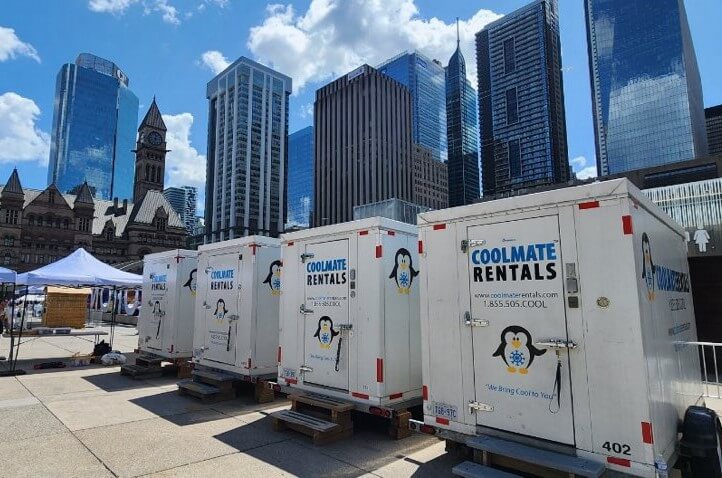
As 2026 begins, many Canadian businesses are reassessing what operational readiness truly means, particularly for managing temperature-sensitive products, food and beverage inventory, and large-scale event logistics. The focus is shifting away from expansion for its own sake and toward preparedness, flexibility, and the ability to respond quickly when conditions change. In this context, decisions about infrastructure, storage, and mobile refrigeration are being reconsidered as organizations seek reliable, temperature-controlled solutions that support both daily operations and peak-demand periods.
Market conditions have made predictability more difficult. Supply chains remain sensitive, demand cycles are less linear, and seasonal peaks often arrive earlier or last longer than expected. Traditional infrastructure, while reliable, can struggle to adapt as quickly. Construction timelines are long, capital commitments are high, and fixed capacity can become a limitation rather than an advantage.
This is why flexible infrastructure is playing a larger role in operational planning. Temporary and modular solutions are no longer viewed as short-term fixes. Research into the temporary storage and modular infrastructure market indicates consistent growth, driven by logistics expansion, industrial activity, and the need for scalable, deployable space. These solutions are now designed to meet modern operational standards, including insulation, climate control, and regulatory compliance, making them suitable for sustained use rather than emergencies only.
The shift reflects a broader change in how businesses define resilience. Stability was once associated with permanence. Today, it is increasingly associated with adaptability. Organizations that can adjust capacity without long lead times are better equipped to manage demand surges, weather-related challenges, and supply chain interruptions, all of which are becoming more common in the Canadian market.
The importance of this flexibility is evident in temperature-sensitive operations. Food and beverage businesses, event organizers, specialty retailers, florists, and healthcare-related sectors all rely on consistent temperature control to protect product quality and safety. When volumes increase or timelines compress, relying solely on existing cold storage can introduce risk. Temporary refrigerated solutions allow businesses to maintain cold chain integrity without overextending permanent facilities or compromising compliance.
What is changing in 2026 is not only the type of infrastructure being used, but also how early it is considered in the planning process. Temporary solutions are being incorporated into forecasts, logistics discussions, and budget planning well in advance. This proactive approach reduces pressure on teams, improves operational reliability, and creates room to adapt when plans inevitably evolve.
Strong partnerships are central to this approach. Operational readiness depends on more than equipment availability. It relies on service, timing, and the ability to deploy solutions where and when needed. For businesses managing temperature-controlled products, dependable support and clear communication are just as critical as capacity itself.
This is where companies like Coolmate fit into the broader picture. By supporting businesses with mobile, temperature-controlled solutions that can be deployed when demand increases or conditions change, Coolmate works alongside operations teams to strengthen their readiness strategy. The goal is not to replace permanent infrastructure, but to complement it with flexibility and reliability when it matters most.
Looking ahead, the distinction between temporary and permanent infrastructure will continue to blur. Access, flexibility, and dependable partnerships are becoming more valuable than ownership alone. In an environment shaped by uncertainty, businesses that build adaptability into their operations are better positioned to perform consistently.
As Canadian organizations plan for the year ahead, operational readiness is less about building more infrastructure and more about creating more intelligent systems. Temporary infrastructure is no longer a fallback option. It has become an essential part of how modern operations stay resilient, responsive, and ready for what comes next.