
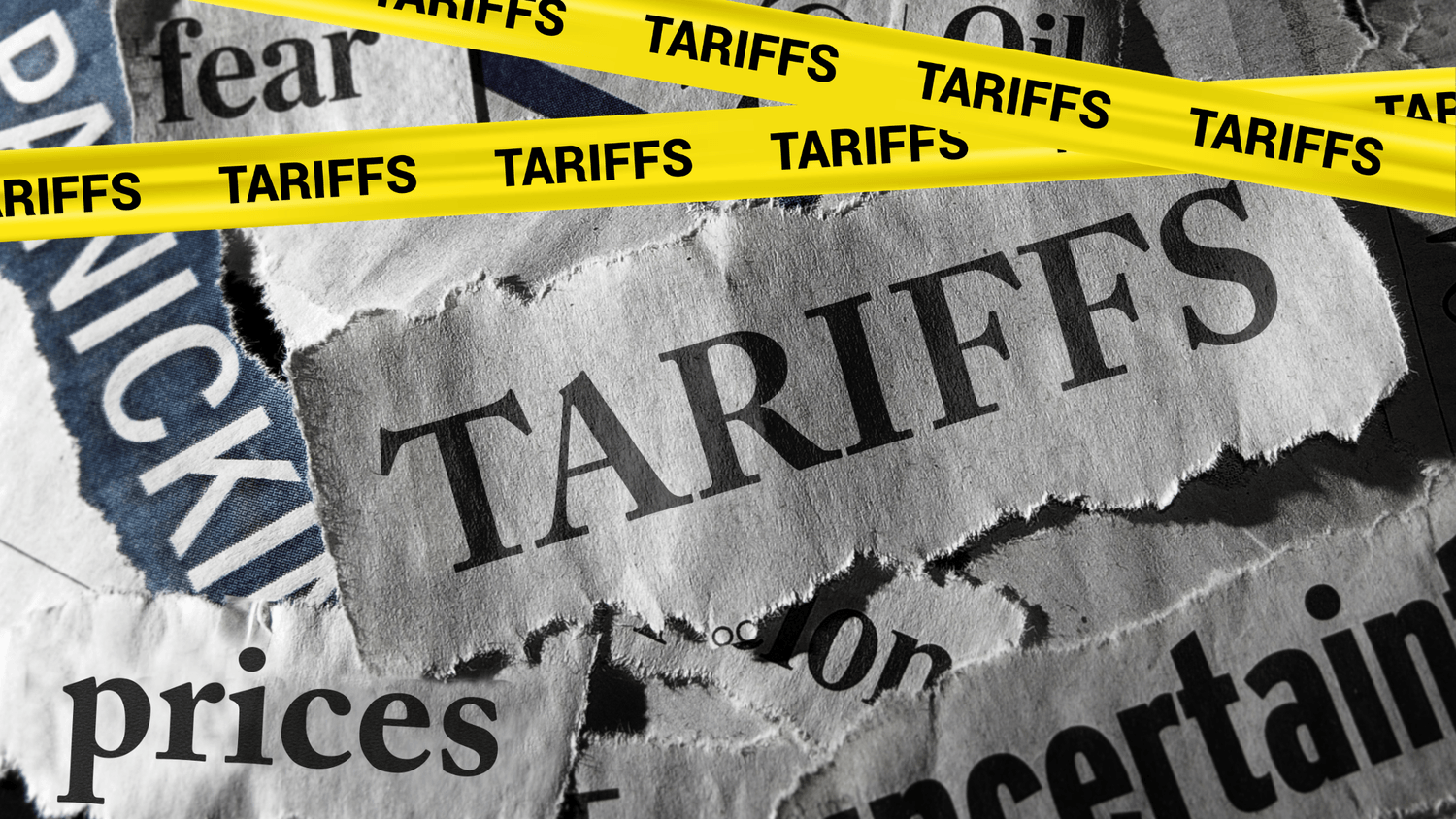
For Canadian businesses, trade uncertainty has become another factor to consider when planning inventory, purchasing, production and day-to-day operations. The latest round of proposed U.S. tariffs has added another layer of uncertainty to an already changing business environment. According to Global News, newly proposed 50% U.S. tariffs could apply to approximately US$20 billion worth of Canadian goods, representing about 5% of Canada’s exports to the United States.
For businesses that rely directly on cross-border trade, the potential impact may be easier to see. But the effects of tariff uncertainty can reach much further, influencing suppliers, costs, purchasing decisions, customer demand and long-term planning. And sometimes, uncertainty itself is the challenge. A tariff does not necessarily stop a product from moving across the border, but it can change the economics and decisions surrounding that product. Businesses may reconsider suppliers, adjust purchasing volumes, delay orders, look for new markets or redirect products that were originally intended for the U.S. Canadian businesses are already responding to changing trade conditions by adjusting sourcing, pricing and production, while some are looking for ways to diversify their suppliers and markets.
For many businesses, this kind of adjustment is easier said than done. Changing suppliers can affect lead times, availability and costs. Purchasing more inventory in advance may provide some protection against future price increases, but it also requires additional working capital and storage space. Delaying purchases or investments can reduce immediate risk, but may create other challenges later. There is also the question of demand. Businesses that sell to U.S. customers may need to consider whether tariffs could affect purchasing decisions. Businesses that source products or materials from the U.S. may face higher costs. Others may experience indirect effects as suppliers, customers and partners throughout the supply chain adjust their own strategies.
This creates a ripple effect that can be difficult to predict. For some businesses, supply chain uncertainty may mean longer lead times, changing inventory requirements or the need to find alternative sources. Not every Canadian business exports to the United States, and not every business will be directly affected by a tariff. But businesses are connected through increasingly complex supply chains, which means changes in one part of the system can have consequences elsewhere. That uncertainty can also affect decisions beyond purchasing and inventory. The Bank of Canada has identified trade-policy uncertainty as a factor affecting business investment and economic activity. When businesses are unsure about future costs, demand or market conditions, decisions about expansion, hiring, equipment and other investments can become more difficult.
For business owners and decision-makers, this creates a difficult balancing act. They still need to manage customers, employees, inventory, suppliers and daily operations while trying to anticipate conditions that may change again. That is where tariff anxiety comes in. It is not simply concern about the cost of a tariff. It is the challenge of making business decisions when today’s information may not be enough to predict tomorrow’s conditions. Businesses cannot control tariff announcements, trade negotiations or international policy. They can, however, look at the areas they can influence. Reviewing supplier relationships, exploring alternative markets, monitoring inventory levels, evaluating logistics and maintaining operational flexibility can help businesses respond when circumstances change.
For companies working with food, beverages, flowers and other temperature-sensitive products, that flexibility can sometimes include access to temporary cold storage, refrigerated storage or mobile refrigeration. Changes in purchasing patterns, delivery schedules or inventory levels can create temporary storage pressure. Temporary refrigerated storage or mobile refrigeration can provide additional temperature-controlled capacity without requiring a permanent expansion.
The goal is not to predict exactly what will happen next. It is to be prepared to respond when conditions change. Trade uncertainty may continue to create challenges for Canadian businesses, but flexibility can make those challenges easier to manage. When the business environment is difficult to predict, having options can be one of the most valuable forms of preparation.